What melting Alps teach us about building with nature
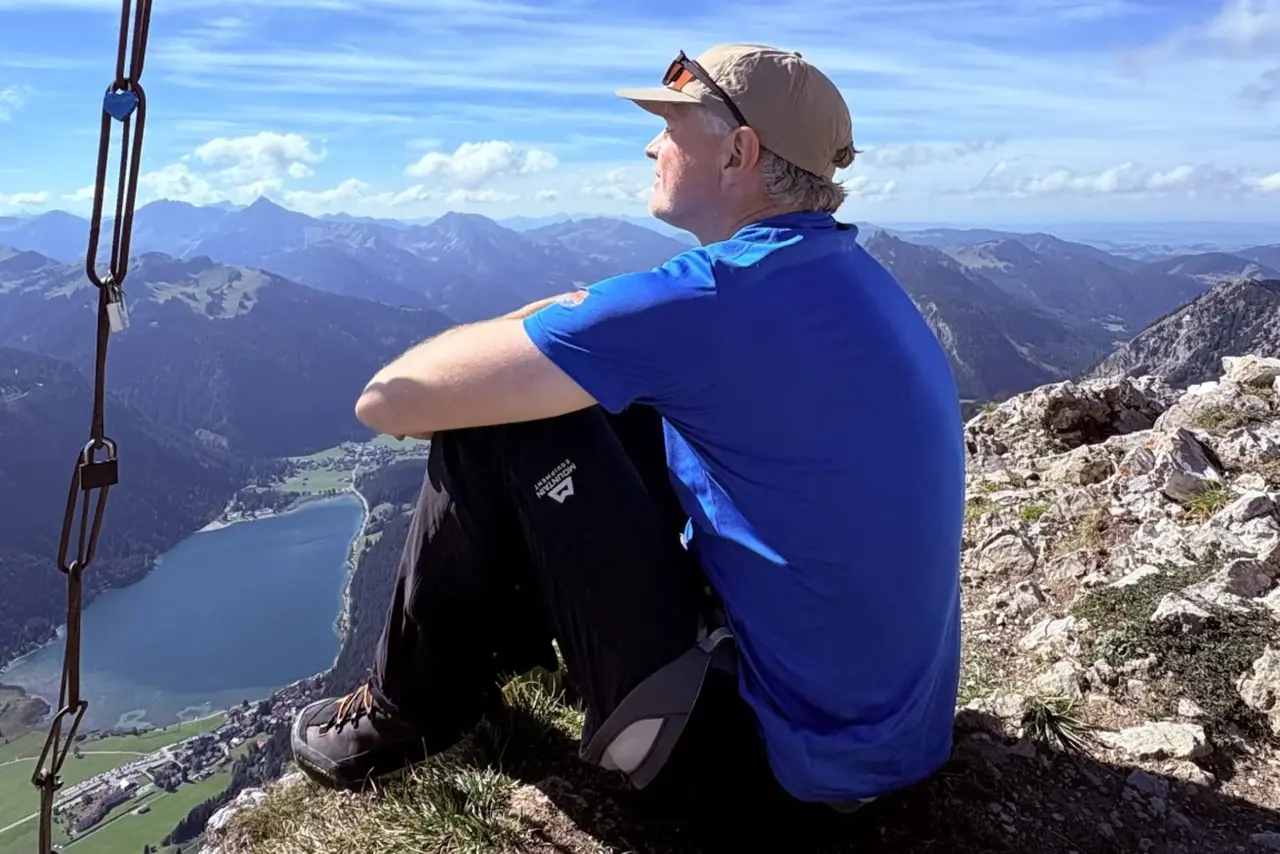
Andy Dornan has been heading into the mountains for forty years. He started at fourteen, when a school trip to the Scottish Highlands first showed him the effect that silence and open space can have on a person. Today, he combines that passion with a very different role: at Wildr, he is responsible for operations, from the moment a deal is signed through to project completion. Yet, as our conversation reveals, these two worlds are closer than they might seem. What he sees happening to the ice as an Alpine trek leader gives him the same sense of urgency that he brings to his work on green roofs and façades in the Netherlands.
Glaciers melting faster than ever
This year, Andy led a six-day trek across the glaciers of Italy’s Adamello massif, the largest ice field in the Dolomites. What he saw concerned him. “Normally, the glaciers retreat by around twenty metres a year. This year, I estimate we’re losing between a hundred and a hundred and fifty metres.” Around six times the usual retreat, in a single season.
The cause lies in the disappearance of the snow cover that normally protects the ice. “The glacier is now completely ‘aper’, a term we use in the mountains when there’s no snow left on it, just bare ice. Without that blanket, the ice melts and erodes much faster.” In the area Andy has been visiting for years, the ice was once around eight hundred metres thick. At the current rate, he expects the glacier to have largely disappeared within ten to twenty years.
A steep drop below the mountain hut
This accelerating retreat makes routes unpredictable. Crevasses grow wider and deeper, while rocks held in place by ice for centuries become unstable. During this year’s trek, there were two serious incidents: a woman broke through a layer of soft snow into a crevasse and had to be rescued. On another occasion, a man slipped on a steep rocky slope and fell around ten metres. Fortunately, he came to rest on a ledge. “It happened right in front of us. At that point, you have to act: get the group to safety, then go down on a rope.” There was no mobile reception, so calling for outside help was not immediately possible.
What struck Andy most was where it happened. Decades ago, a mountain hut in the area had been built almost level with the glacier: climbers could step straight from the hut onto the ice. Today, the glacier lies hundreds of metres below it, with a steep stretch of exposed, unstable rock between the hut and the ice. It shows, almost literally, how much of the landscape has disappeared in a relatively short time.
“We encounter these kinds of risks on treks more often now than we did ten years ago,” Andy says.
The changes are visible elsewhere in the Alps too: this summer, Mont Blanc was completely closed to climbers for the first time because of the risk of rockfall. Large boulders are coming loose as the ice that normally holds them in place melts. For Andy, it is a warning sign: high-altitude mountain routes are no longer a place for inexperienced climbers, however straightforward they may look on a map.
From mountain guiding to operations at Wildr
Back in the Netherlands, Andy uses his technical background to keep Wildr’s projects running smoothly. “Once a deal is signed, operations takes over: scheduling, delivery and coordination, working closely with construction partners, suppliers and technical specialists.” For green roof and façade projects, that means moving between certification, lifting logistics, irrigation technology and scheduling — or, as he puts it, making limited resources go as far as possible.
His background in IT comes in useful. For a client in Maastricht, for example, he set up wireless access to irrigation control cabinets, allowing the system to be managed entirely remotely. For a grid operator, Wildr developed an AI tool that automatically generates reports on condensation and associated risks. “That combination of technology and nature is what drives me,” Andy says. “And I simply love seeing the end result — what we can achieve as an organisation.”
Butterflies were here long before us
Wildr works with the Dutch Butterfly Conservation organisation to share knowledge and raise awareness among clients. For Andy, that touches on something more fundamental than the outcome of a project: “Butterflies, birds and bees have been here far longer than we have. They deserve a healthy habitat. We need to repair the damage caused by human-driven warming. I feel a responsibility to do that.”
That same conviction makes him critical of the sector he works in. “Nature is still too often treated as a provisional sum at the end of a budget — something added afterwards to make things look nicer.” What is needed, he believes, is a fundamental shift: from quick and cheap to sustainable and carefully considered, with as much attention paid to people, the environment and health as to costs and schedules. Water plays a key role. Andy expects water scarcity to increase in the coming years and advocates retaining as much rainwater as possible, rather than draining it away, as has traditionally been the approach in the Netherlands.
Nature takes patience, but waiting is not an option
For Andy, his mountain treks confirm something he already suspected: climate change is not hype, but a real and tangible threat.
He sees measurement and collaboration as essential to making a meaningful impact. “We often think we know, but we’re not yet one hundred per cent certain. By properly monitoring things like biodiversity, water management and cooling, we can provide evidence of what works — and use that to achieve much more.”
“Nature teaches you to be patient. That things need to happen in the right order. And that nature can recover.” Recovery takes time. That is precisely why waiting is not an option.
Andy calls for clearer choices and stronger regulation: a mandatory proportion of green space in every new development and more sustainable use of materials, combined with closer collaboration between government, the construction sector, developers, ecologists and conservation organisations. Instead of deciding anew on every project whether nature has a place, it should become an integral part of how we build.
A lasting love of heights, technology and flowers
The changes in the Alps show what happens when natural systems are under sustained pressure. For Andy, they make the task closer to home all the clearer: “We can’t solve climate change with one green roof, one façade or one project. But every greener building can become part of a wider system of water, soil, plants, animals and people.”
Meanwhile, he remains active in the mountains, although he expects to do less guiding over time because of the physical demands and the risks he experienced first-hand this year. His love of the mountains remains unchanged. From that first Scottish hillside covered in wildflower meadows, where he first felt that spark, to his work today on high rooftops and around buildings at Wildr.

This website uses cookies. By using this website, you indicate that you agree to the use of cookies. Read more