Nature-inclusive storage units for Heijmans: the power of chain collaboration
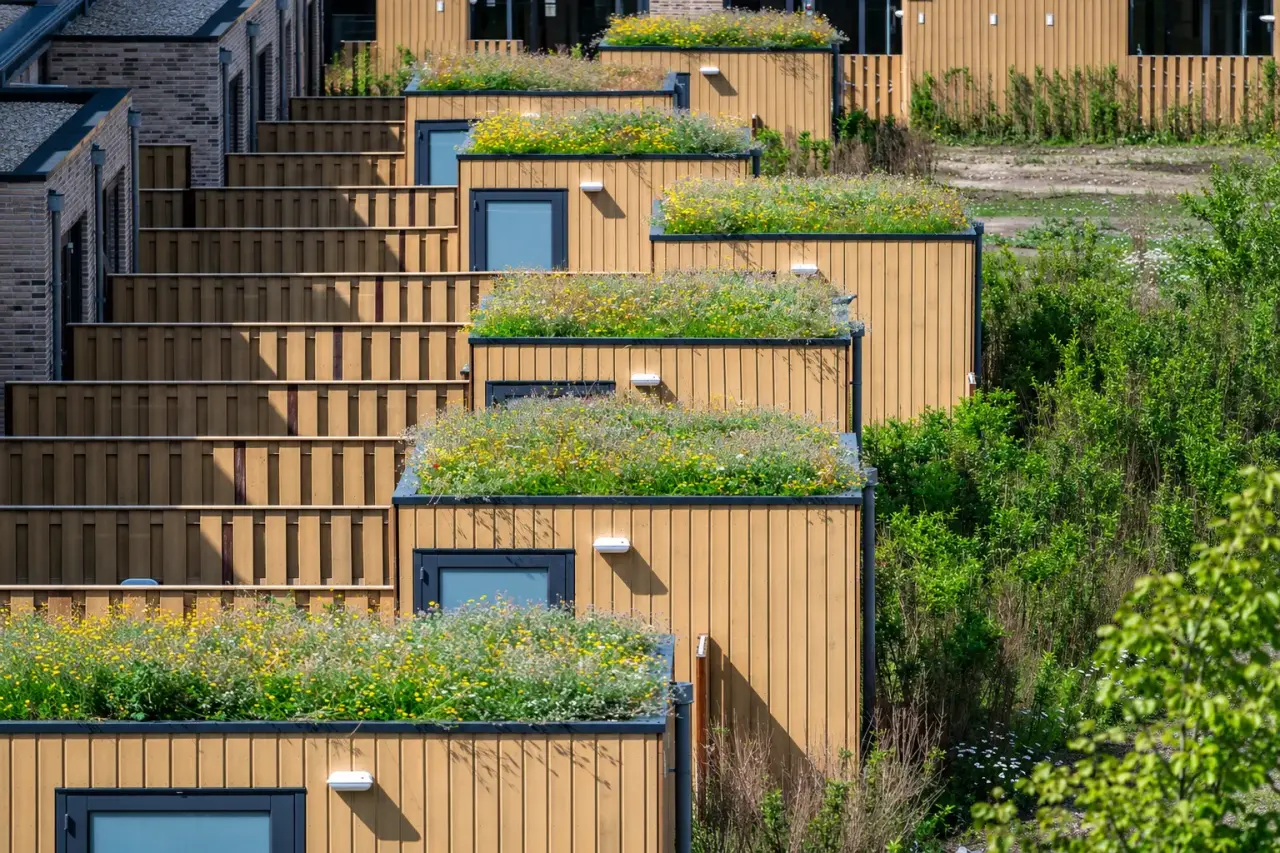
When looking at a storage shed, most people see a practical space for storing bicycles and garden tools. Yet, this modest building is playing an increasingly important role in new area developments. Not only as a functional part of a residential neighborhood, but also as a green stepping stone for biodiversity, climate adaptation, and a more attractive living environment. All these sheds together can therefore make a significant impact.
The challenges facing the Netherlands require a different approach to design and construction. New homes need to be realized more quickly, while space is also needed for nature, water storage, and a healthy living environment. The European Nature Restoration Regulation also encourages municipalities and developers to strengthen urban ecosystems.
It is precisely at this intersection that the nature-inclusive shed demonstrates how chain collaboration can lead to an integrated solution for multiple societal challenges.
One design, multiple functions
Within the area development Park Vijfsluizen in Vlaardingen, the nature-inclusive shed is much more than a standalone outbuilding in the garden. By combining different functions, a solution is created that adds both practical and ecological value.
Heijmans brought together parties and knowledge to make nature-inclusive solutions an integral part of the project from the very first design phase. Foreco realized the high-quality prefab wooden sheds, and Wildr provided the Roof Flower Meadow on the roof.
This way, an unused black roof surface is transformed into a colorful piece of nature that residents can experience from their homes. At the same time, the vegetation forms a valuable link for bees, bumblebees, beetles, butterflies, and birds, among others. The result is a small space where smart construction, nature, climate adaptation, and living quality come together.
The roof as an ecological link
Roofs are among the largest unused surfaces in our built environment. Where traditionally a simple roof finish is chosen, a green roof can give this space multiple functions.
The Roof Flower Meadow by Wildr consists of a great diversity of native plant species that bloom for much of the year. This creates food for wild bees, hoverflies, butterflies, and other insects. The vegetation also provides nesting material, shelter, breeding opportunities, and safety.
At the same time, the system temporarily retains rainwater, helps cool during warm periods, and protects the roof structure from weather influences. This also provides direct value for residents: a greener and more attractive view instead of a traditional black roof.
When these sheds are applied on a larger scale in a neighborhood, a network of green stepping stones is created that contributes to a stronger urban ecosystem.
Collaborating from individual expertise
The strength of the nature-inclusive shed does not lie in a single product or party. Each partner brings its own expertise.
Heijmans connects the various disciplines within area development and ensures that biodiversity and nature inclusivity are considered from the very first design phase. Foreco builds high-quality prefab wooden sheds that can be produced and installed efficiently, forming the solid foundation of the concept.
Wildr fulfills the nature-inclusive ambition with the Roof Flower Meadow. This concept is based on ecological knowledge, translated into a vegetation system with more than forty carefully selected native plant species in a specially developed soil. This combination ensures an attractive blooming appearance and ecological functions such as water storage, cooling, fine dust capture, and food and habitat for insects.
Precisely because each party focuses on its own expertise, a solution arises that goes beyond the sum of its individual parts.
From project to standard
Biodiversity, climate adaptation, and housing construction will become increasingly interconnected in the coming years. This requires not only innovative products, but above all parties that share knowledge and develop solutions together.
The nature-inclusive shed shows that such collaboration is already possible in practice. A relatively small building thus gains a significance that goes far beyond storage alone. It becomes part of a residential neighborhood where construction and nature reinforce each other, and every square meter can contribute to a healthier living environment.
In the coming years, the concept can be further expanded with, for example, nesting facilities, green walls, and other nature-inclusive elements. In this way, the shed can develop into a fully-fledged part of the urban ecological infrastructure.